
The Complete Guide to Toddler Parenting in India: Navigating the Exciting (and Exhausting) Years
TL;DR: Parenting toddlers aged 1-3 years brings unique joys and challenges for Indian families. This comprehensive guide covers developmental milestones, behavior management, nutrition with Indian diet plans, potty training methods, speech development in multilingual households, socialization strategies, and establishing healthy sleep routines. Learn evidence-based techniques adapted for Indian parenting contexts, with practical tips you can implement today.
Introduction
The toddler years—roughly between 12 and 36 months represent one of the most transformative periods in your child's life. As Indian parents, you're witnessing your baby transform into a walking, talking, opinionated little person who seems determined to test every boundary you set. One moment they're cuddling in your lap, and the next, they're throwing their beloved daal-chawal across the kitchen because it's "not right."
If you're feeling overwhelmed, you're not alone. According to recent parenting surveys, over 73% of Indian parents report that the toddler years are more challenging than infancy, primarily due to behavioural issues, feeding difficulties, and sleep disruptions. The pressure is even more intense when you're balancing advice from multiple generations, each with their own parenting philosophies.
Common challenges Indian parents face during this stage include:
Managing public tantrums in traditional joint family settings
Balancing grandparents' traditional methods with modern parenting approaches
Navigating picky eating when food is central to Indian culture
Handling sleep routines when family members have different schedules
Supporting multilingual development in households where multiple languages are spoken daily
This guide will help you navigate these challenges with confidence, combining time-tested wisdom with modern child development research, all adapted for the Indian parenting context.

Understanding Your Toddler's Development
Understanding what's happening inside your toddler's rapidly developing brain and body can transform frustration into patience and confusion into confidence.
Physical Milestones
Between 12 and 36 months, toddlers achieve remarkable physical feats. By 15 months, most toddlers can walk independently, though some continue cruising along furniture. By 18 months, they're typically climbing stairs (often giving parents minor heart attacks), and by age 2, they can run, kick a ball, and jump with both feet leaving the ground.
Fine motor skills develop simultaneously. Your 12-month-old who struggled with the pincer grasp becomes a 24-month-old who can stack six blocks, scribble with crayons, and turn book pages individually. By 36 months, many toddlers can use a spoon effectively (though meals remain messy affairs), wash their hands with help, and dress themselves with simple clothing items.
Key data point: Research shows that Indian toddlers who spend at least 60 minutes daily in active, unstructured play demonstrate 34% better gross motor development compared to peers with primarily sedentary indoor activities.
Cognitive Growth
The toddler brain is extraordinary. Neural connections form at lightning speed over one million new neural connections every second during the first three years of life. This explains why your toddler can suddenly understand complex instructions like "Please get your red shoes from the bedroom and bring them to Dadi."
Object permanence solidifies during this period, which is why peek-a-boo becomes less interesting but hide-and-seek becomes thrilling. Toddlers begin understanding cause and effect, which explains their fascination with repeatedly dropping food to watch it fall or flushing the toilet multiple times to observe the water swirl away.
Between 18 and 24 months, symbolic thinking emerges. Your toddler might use a banana as a phone or feed their stuffed elephant imaginary khichdi. This imaginative play is crucial for cognitive development and problem-solving skills.
Emotional Development
Emotionally, toddlers are learning to navigate a complex inner world without the vocabulary to express it. The technical term for this stage is "emotional dysregulation," but parents simply call it "intense." Your toddler feels every emotion at maximum volume pure joy over a butterfly, devastating heartbreak over the wrong colour cup, volcanic rage when it's time to leave the park.
Separation anxiety often peaks between 15 and 18 months. The child who happily went to Nani's house now clings to you desperately when you try to leave for work. This is actually a sign of healthy attachment and will gradually improve as their cognitive abilities develop and they understand that you always come back.
Toddlers also begin developing empathy during this period, though it's still quite egocentric. They might offer their favourite teddy to a crying friend or pat your arm when you're sad, demonstrating early emotional intelligence.
Managing Toddler Behaviour
Toddler behaviour can be baffling, but understanding the "why" behind challenging behaviours makes the "how to handle it" much clearer.
Dealing with Tantrums
Tantrums are the hallmark of toddlerhood. On average, toddlers have one to three tantrums daily, each lasting between 2 and 15 minutes. In India, public tantrums can feel particularly stressful with well-meaning relatives and strangers offering unsolicited advice or judgmental looks.
Understanding Triggers
Common tantrum triggers include:
Tiredness, hunger, or overstimulation (the "HALT" principle—Hungry, Angry, Lonely, Tired)
Transitions between activities
Being told "no" or having desires thwarted
Lack of language to express needs
Desire for independence conflicting with actual capabilities
Calm-Down Techniques for Indian Homes
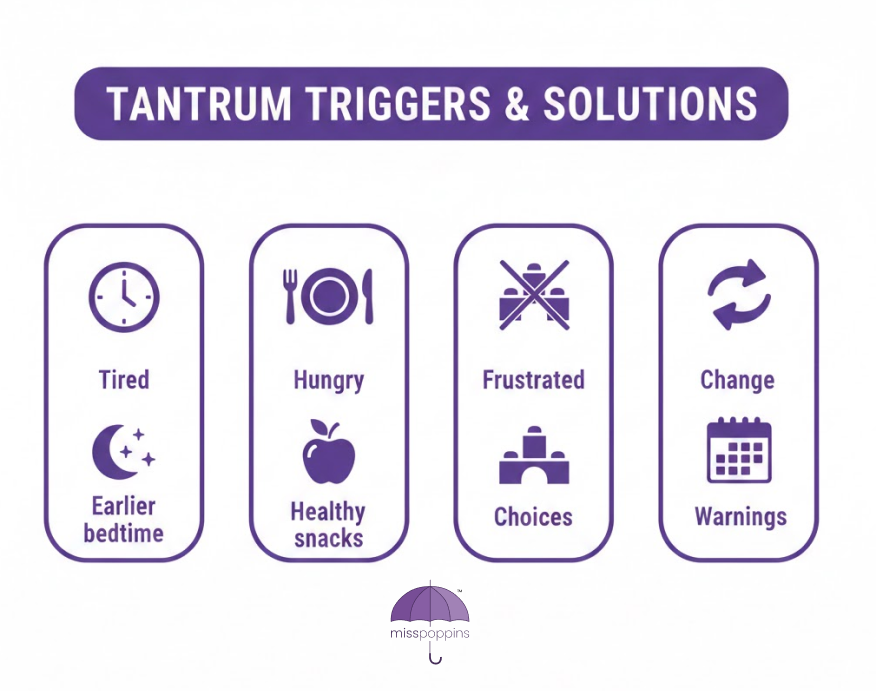
When a tantrum strikes, try these culturally adapted approaches:
The "calm corner" technique works well even in smaller Indian homes. Designate a quiet spot with soft cushions where your child can go to calm down. Unlike a timeout focused on punishment, this is a safe space for emotional regulation. Keep a few soothing items there—perhaps a soft toy, a picture book, or even a small bottle filled with colored water and glitter that they can shake and watch settle.
Co-regulation is particularly effective. This involves the parent remaining calm and present while the child experiences their big emotions. Sit nearby, speak in a low, soothing voice, and offer physical comfort if they accept it. You might say, "You're very angry that we had to leave the park. It's okay to feel angry. I'm right here with you."
In joint family settings, establish a consistent response plan with all caregivers. If Dadi tends to immediately give in to stop the crying while you're trying to set boundaries, the mixed messages confuse your toddler and actually increase tantrum frequency. Have a family meeting to align on approach.
Setting Boundaries
Toddlers need boundaries like plants need sunlight essential for healthy growth. However, effective boundary-setting looks different than discipline for older children.
Age-Appropriate Discipline
For toddlers, discipline means teaching, not punishment. Their prefrontal cortex the part of the brain responsible for impulse control and understanding consequences is still developing and won't fully mature until their mid-twenties. This means they literally cannot "know better" the way adults expect.
Effective strategies include:
Redirection: Instead of "Don't touch that," try "Let's play with this instead"
Natural consequences: If they throw their toy, the toy goes away for a while
Logical consequences: If they won't hold your hand in the parking lot, they must be carried
Positive phrasing: "Walking feet indoors" works better than "No running"
Consistency Across Family Members
In Indian joint families, consistency can be challenging when Dada says yes, Papa says no, and Mummy has a different rule entirely. Children thrive on predictability, so varying rules from different caregivers creates anxiety and increases testing behaviours.
Schedule a family meeting to establish core rules everyone will uphold. Perhaps:
No hitting (people, animals, or objects)
Hands must be held in parking areas and near roads
Screen time only after meals and during designated times
Bedtime routine starts at the same time nightly
Allow flexibility in less critical areas. If Nani wants to give an extra biscuit occasionally or Dadu has a different way of playing, that's fine. What matters is consistency on safety, respect, and key routines.
Positive Reinforcement
Toddlers repeat behaviours that get attention. Unfortunately, negative behaviours often get the most attention, inadvertently reinforcing them. Positive reinforcement flips this script by giving abundant attention to desired behaviours.
Specific praise works better than general praise. Instead of "Good job," try "I noticed you used gentle hands when petting the dog. That was very kind." This teaches exactly what behaviour pleased you and encourages repetition.
Reward systems can work for toddlers approaching age three. A simple sticker chart for staying in bed all night or using the potty successfully provides visual motivation. However, avoid material rewards for expected behaviours like eating meals or being kind, as this can create unhealthy patterns.
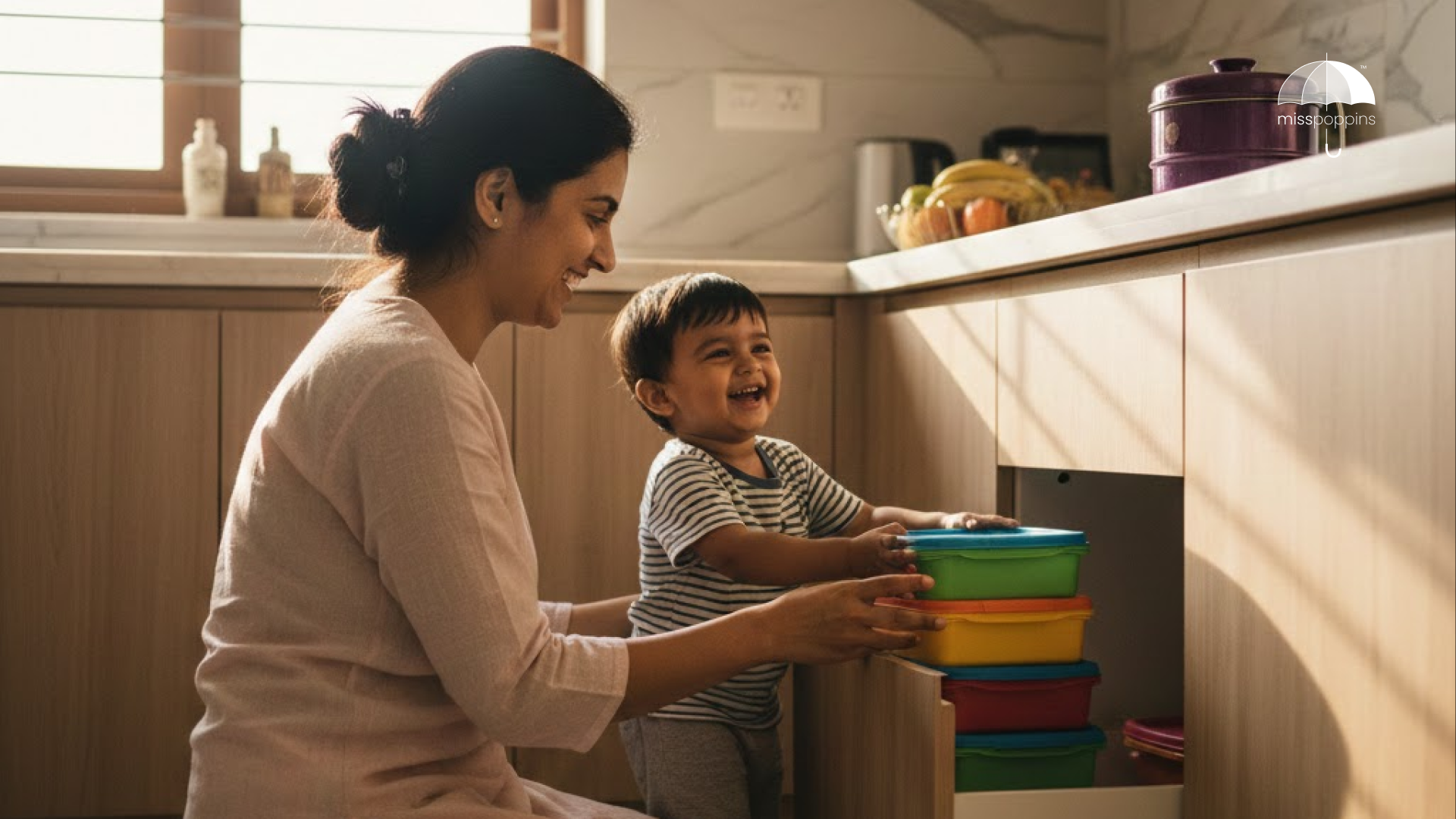
Nutrition for Growing Toddlers
Food battles are almost universal during toddlerhood, but they're especially stressful in Indian culture where feeding is an expression of love and multi-course meals are the norm.
Balanced Indian Diet for Toddlers
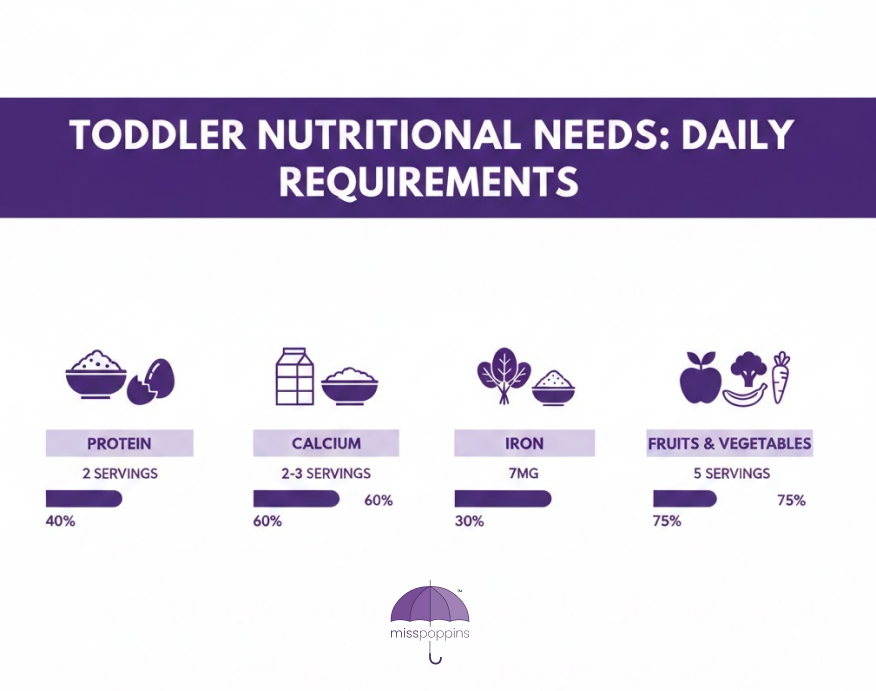
Between ages 1 and 3, toddlers need approximately 1,000-1,400 calories daily, divided across three meals and two snacks. They require adequate protein, healthy fats for brain development, calcium for growing bones, iron to prevent anemia, and a rainbow of fruits and vegetables for vitamins and fiber.
An ideal Indian toddler meal plan might include:
Breakfast: Idli with mild sambar, banana, milk
Mid-morning snack: Whole wheat biscuit, apple slices
Lunch: Soft chapati, dal, vegetable sabzi (like mashed carrots or pumpkin), curd, rice
Evening snack: Homemade whole wheat mathri, milk
Dinner: Khichdi with mixed vegetables, small amount of ghee
Important nutritional data: Studies show that 69% of Indian toddlers are deficient in iron, and 42% don't meet daily calcium requirements. Incorporate iron-rich foods like fortified cereals, dal, spinach, and ragi, paired with vitamin C sources (like tomatoes or lemon) for better absorption.
Dealing with Picky Eaters
Food neophobia—fear of new foods—peaks between 18 and 24 months as an evolutionary protection mechanism. Your previously adventurous eater suddenly refuses everything except white rice and curd.
Effective strategies include:
Repeated exposure: Research shows children may need 10-15 exposures to a new food before accepting it. Keep offering rejected vegetables in different preparations without pressure.
Family-style meals: When possible, serve meals family-style rather than pre-plated. Toddlers are more likely to try foods they see others enjoying. The "Didi is eating carrots and she's so strong" approach can work wonders.
No short-order cooking: Prepare one meal for the family. Offer at least one food you know your toddler accepts, but don't make separate meals. They won't starve from skipping one meal, but they will learn that meals aren't negotiations.
Division of responsibility: Parents decide what foods are offered, when, and where. Children decide whether to eat and how much. This framework, developed by feeding expert Ellyn Satter, reduces power struggles dramatically.
Healthy Snack Ideas
Stock your kitchen with nutritious, toddler-friendly snacks:
Homemade whole wheat crackers with mild paneer
Ragi or wheat banana pancakes
Boiled sweet potato cubes
Fresh fruit pieces (banana, mango, chikoo, papaya)
Curd with fruit
Steamed vegetable sticks with hummus or hung curd dip
Puffed rice (murmura) mixed with roasted moong dal
Small whole wheat sandwiches with mashed vegetables
Avoid choking hazards like whole grapes, nuts, popcorn, and hard candies until after age four. Always supervise meals and snacks.
Potty Training in India
Potty training approaches vary dramatically across Indian regions and families, from early elimination communication practiced in many traditional households to Western-style training after age two.
When to Start
Most children show readiness between 18 and 30 months, though some aren't ready until three years or older. Signs of readiness include:
Staying dry for 2+ hours
Recognizing the sensation of needing to go
Ability to pull pants up and down
Following simple instructions
Interest in others' bathroom habits
Discomfort with dirty diapers
Starting before your child shows these signs often leads to longer training periods and more frustration for everyone involved. Data shows that children who begin training after 27 months typically complete the process faster than those who start earlier.
Traditional vs Modern Methods
Many Indian families practice elimination communication from infancy, learning to recognize baby's cues and holding them over a potty or toilet. When done responsively, this can be effective, though it requires significant time investment and isn't feasible for all families, particularly working parents.
Modern potty training typically involves:
Introducing a child-sized potty or toilet seat insert
Creating a routine of trying after meals and naps
Positive reinforcement for successes
Remaining calm during accidents
Transitioning from diapers to training pants to underwear
Hybrid approaches work well for many Indian families perhaps using elimination communication at home while using diapers during outings and naps.
Common Challenges
Regression is normal and common during stressful periods moving homes, new sibling arrival, starting day care, or family conflicts. Respond with patience rather than punishment.
Public toilets present unique challenges in India where facilities aren't always child-friendly or clean. Carry a portable potty seat, sanitizing wipes, and extra clothing. Many parents keep a small plastic potty in the car for emergencies.
Night time dryness typically develops 6-12 months after daytime training. Don't rush night time training bladder control during sleep is physiological and can't be taught. Use night time diapers without shame until your child naturally stays dry through the night.
Speech and Language Development
Language development during toddlerhood is remarkable. Most 12-month-olds speak 1-3 words, 18-month-olds know 10-20 words, 24-month-olds use 50+ words and two-word phrases, and 36-month-olds speak in 3-4 word sentences and are understood by strangers most of the time.
Multilingual Toddlers
India's linguistic diversity means many toddlers are exposed to multiple languages daily perhaps Hindi at home, English at day care, and Marathi or Tamil with grandparents. Good news: Research consistently shows that multilingualism doesn't delay language development or cause confusion. Multilingual children may start speaking slightly later but catch up quickly and ultimately have cognitive advantages.
Each language may develop at different rates, and "code-switching" mixing languages within sentences is completely normal and actually demonstrates sophisticated linguistic awareness. Don't correct this natural mixing process.
To support multilingual development:
One person, one language approach can work well, with each caregiver consistently using their strongest language
Time and place strategy involves using different languages in different contexts (one language at home, another at daycare)
Maintain consistency in whichever approach you choose
Read, sing, and play in all languages your child is learning
When to Worry About Delays
While development timelines vary, consult your paediatrician if your child:
Isn't using any words by 18 months
Isn't combining words by 30 months
Has lost previously acquired language skills
Isn't understood by family members most of the time by age 3
Doesn't make eye contact or respond to their name
Shows frustration but doesn't attempt to communicate
Early intervention dramatically improves outcomes for speech delays. Don't adopt a "wait and see" approach if you have genuine concerns. Organizations like the Indian Speech and Hearing Association (ISHA) can connect you with qualified speech therapists.
Socialization and Play
Social skills and play abilities develop hand-in-hand during toddlerhood, setting the foundation for future friendships and collaborative abilities.
Playdates in Indian Context
Traditional joint family systems provided built-in playmates through cousins and siblings. Urban nuclear families often need to be more intentional about socialization.
For toddlers under 24 months, "parallel play" is the norm—children play alongside each other rather than together. This is developmentally normal, not a social deficiency. By 30-36 months, cooperative play emerges, with children working toward shared goals and engaging in basic negotiations.
Effective playdate strategies:
Keep them short: 60-90 minutes is ideal for preventing overstimulation
Plan activities: Having 2-3 structured options prevents conflicts over toys
Have duplicates: Two of popular toys prevents battles over sharing
Stay present: Toddlers need adult support for conflict resolution
Partner with like-minded parents: Similar parenting philosophies make playdates smoother
In Indian apartment complexes, "compound time" or "society play" offers wonderful socialization opportunities. The mixed-age environment lets younger children learn from older ones while older children develop nurturing skills.
Educational Toys and Activities
The best toys for toddlers are open-ended, encouraging creativity and imagination rather than passive consumption. Despite marketing claims, research shows that traditional simple toys often provide more developmental benefits than expensive electronic gadgets.
Excellent toddler toys include:
Building blocks and stacking toys (develops spatial reasoning and fine motor skills)
Shape sorters and simple puzzles (problem-solving and hand-eye coordination)
Push and pull toys (gross motor development)
Play kitchen items and doctor sets (imaginative play and role-playing)
Art supplies (crayons, washable paints, clay)
Books, books, and more books (language development and bonding)
Balls of various sizes (coordination and active play)
Traditional Indian toys like wooden tops (lattu), dolls dressed in traditional clothing, and toy musical instruments offer cultural connection while supporting development.
Activities matter more than toys. Engage in:
Messy play with water, sand, or flour
Nature walks collecting leaves and stones
Singing traditional nursery rhymes and songs
Simple cooking activities like stirring or pouring
Dance parties to favorite music
Building blanket forts
Playing with everyday household items (pots, wooden spoons, cardboard boxes)
Sleep Routines for Toddlers
Sleep battles top the list of parenting challenges. Toddlers need 11-14 hours of sleep daily (including naps), but getting them to actually sleep that much is another matter.
Creating effective sleep routines:
Consistency is paramount. Toddlers thrive on predictability. Bedtime should happen at roughly the same time nightly (within 30 minutes), with the same sequence of activities signaling sleep time.
A sample routine might include:
Dinner (2-3 hours before bed)
Bath time with calming activities
Changing into pajamas
Quiet play or reading
Brushing teeth
Story time (2-3 books)
Lullaby or prayer
Lights out with verbal cue ("It's sleep time now")
Environmental factors matter. Create a sleep-conducive environment with:
Room temperature around 68-72°F (20-22°C)
Darkness or very dim night light
White noise to mask household sounds in busy Indian homes
Comfortable, breathable bedding
Common sleep challenges and solutions:
Bedtime resistance: Offer limited choices within boundaries—"Do you want to read two books or three? Should Papa or Mummy do bedtime tonight?" This gives autonomy while maintaining control.
Night wakings: If your toddler still wakes at night, respond quickly but boring-ly. Don't turn on bright lights, engage in conversation, or bring them to the living room. Brief comfort, then back to bed.
Early rising: Use blackout curtains and white noise. If they wake very early, establish that they should stay in bed until a specific time (using a toddler clock that changes color can help).
Nap transitions: Most toddlers drop from two naps to one between 15-18 months. During the transition, expect some rough days. Maintain a flexible schedule until the new pattern stabilizes.
In joint family homes, coordinate with family members so the household quiets down during your toddler's bedtime. Request that visitors schedule around sleep times when possible, and don't apologize for prioritizing your child's rest—you're not being rude, you're being a responsive parent.
Conclusion
The toddler years test every parent's patience, creativity, and resilience. There will be days when you question every decision, wonder if you're doing anything right, and count down the minutes until bedtime. This is normal. What you're doing is one of the hardest jobs in the world, and you're doing it during a particularly challenging developmental stage.
Remember these key principles:
Development happens on individual timelines - comparison is the thief of parenting joy
Behavior is communication - look for the need behind challenging actions
Connection before correction - your relationship is more important than any single battle
Consistency matters more than perfection - you don't need to be perfect, just present and trying
Self-care isn't selfish - you cannot pour from an empty cup
Community is essential - seek support from other parents who understand the struggle
The toddler years are temporary. One day, sooner than you imagine, you'll miss those chubby hands, that wobbly run, and even (maybe) those dramatic tantrums. You're not just surviving these years—you're building the foundation for your child's future while creating precious memories that will sustain your family forever.
For Indian parents balancing traditional wisdom with modern knowledge, integrating joint family dynamics with individual parenting choices, and raising children in our rapidly changing society, the journey requires extra navigation. But you have strengths too—extended family support systems, rich cultural practices that promote child development, and strong community bonds.
Trust yourself. You know your child better than any expert. When you combine that intimate knowledge with evidence-based strategies adapted for your family's context, you become the expert your toddler needs.

Take Your Parenting Journey Further
Ready to dive deeper into toddler parenting with expert support tailored for Indian families?
Download the MissPoppins App - Access personalized parenting guidance, connect with certified child development experts, join a community of parents navigating similar challenges, track developmental milestones, and get answers to your specific questions 24/7. Available on iOS and Android.
Download Our Free Ebook: "The Indian Parent's Complete Toddler Handbook" - This comprehensive 50-page guide includes sample meal plans adapted for Indian cuisine, printable visual schedules and routine charts, tantrum tracking worksheets, developmental milestone checklists, and age-appropriate activity ideas using materials you already have at home.
Visit MissPoppins.in today to access these resources and explore our full range of parenting support services designed specifically for Indian families.