
Complete Guide to Baby's First Year: A Month-by-Month Journey for Indian Parents
TL;DR: Your baby's first year is a remarkable journey filled with rapid growth, countless milestones, and precious moments. This comprehensive guide walks Indian parents through each stage—from newborn feeding and sleep patterns to introducing traditional first foods, managing teething, and celebrating those first steps. With practical tips on creating safe environments in Indian homes, navigating bilingual development, and understanding vaccination schedules, you'll feel confident supporting your little one's growth every step of the way.
Introduction: The Magical First Year
The first year of your baby's life is nothing short of extraordinary. In just 12 months, your newborn will transform from a tiny, dependent infant into a curious, mobile toddler with a personality all their own. This journey, while beautiful, can feel overwhelming for new parents—especially when navigating the unique cultural context of Indian families.
Understanding what to expect month by month helps you prepare for each stage, celebrate milestones, and recognize when your baby needs extra support. Whether you're a first-time parent or welcoming another child into your family, this guide provides practical, culturally relevant advice to help you navigate your baby's first year with confidence.
From understanding feeding patterns and sleep routines to introducing traditional Indian foods and managing the challenges of babyproofing a joint family home, we'll walk through everything you need to know. Let's embark on this incredible journey together.
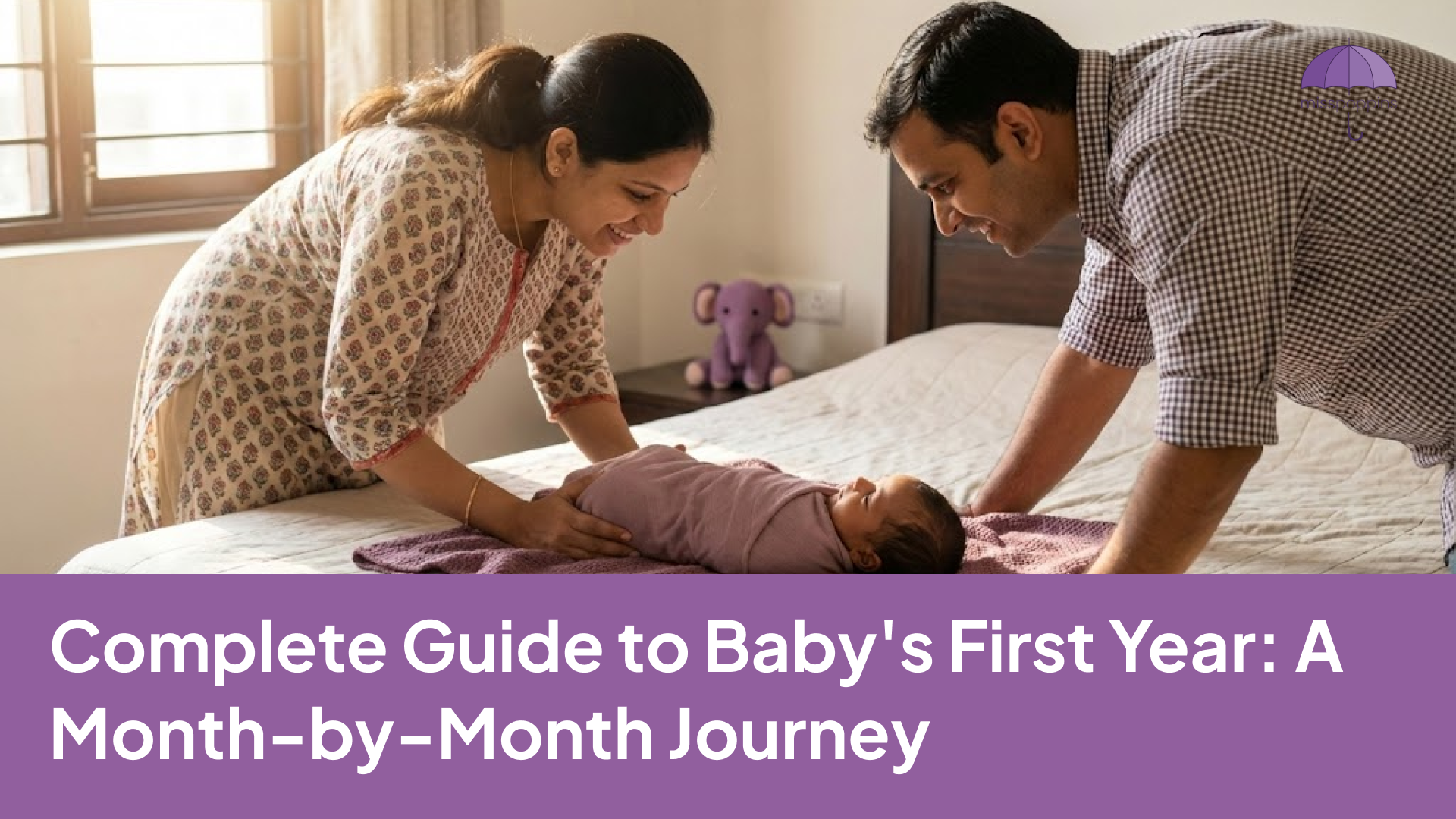
Newborn Stage (0-3 Months): The Fourth Trimester
The first three months are often called the "fourth trimester" because your baby is adjusting to life outside the womb. This period is characterized by rapid development, establishing feeding routines, and learning your baby's unique cues.
Feeding Your Infant
Feeding is one of the most important aspects of newborn care, and it's natural to have questions about what's best for your baby.
Breastfeeding vs Formula: The Indian Perspective
In Indian culture, breastfeeding is traditionally encouraged and often extended, with many mothers nursing well into the toddler years. The benefits of breastfeeding are numerous—it provides optimal nutrition, builds immunity, and creates a special bond between mother and baby. Organizations like the Indian Academy of Pediatrics recommend exclusive breastfeeding for the first six months.
However, it's crucial to acknowledge that breastfeeding doesn't work for everyone. Some mothers face challenges like low milk supply, medical conditions, or need to return to work early. Formula feeding is a perfectly valid choice, and combination feeding (breast milk and formula) can offer flexibility. What matters most is that your baby is fed, growing well, and that you're supported in your feeding journey.
In joint family settings, you may receive well-meaning but sometimes conflicting advice from elders. While traditional wisdom has value, modern pediatric guidelines should guide your decisions. Find a balance that respects your family's input while prioritizing evidence-based practices.
Feeding Frequency
Newborns have tiny stomachs and need frequent feeding:
Breastfed babies: 8-12 times per day (every 2-3 hours)
Formula-fed babies: 6-8 times per day (every 3-4 hours)
Never wake a healthy, full-term baby for night feeds unless advised by your pediatrician
Follow your baby's hunger cues rather than strict schedules
Burping Techniques
Proper burping helps prevent discomfort and reduces spit-up:
Over the shoulder: Hold baby against your chest, supporting their bottom, and gently pat or rub their back
Sitting up: Sit baby on your lap, support their chest and head with one hand, pat back with the other
Face down: Lay baby face-down across your lap and gently rub their back
Burp your baby during and after each feed, especially if they seem fussy.
Sleep Patterns
Newborn sleep can be unpredictable, but understanding safe sleep practices helps everyone rest better.
Creating a Safe Sleep Environment
Safety is paramount during sleep:
Always place baby on their back to sleep (reduces SIDS risk by 50%)
Use a firm mattress with a fitted sheet
Keep the crib free of pillows, blankets, toys, and bumper pads
Maintain room temperature between 20-22°C
Consider a pacifier for naps and nighttime (after breastfeeding is established)
Co-sleeping in Indian Families
Co-sleeping is common in Indian households, often practiced across generations. While room-sharing (baby sleeping in parents' room but on a separate surface) is recommended for the first 6-12 months, bed-sharing requires careful consideration.
If you choose to bed-share:
Ensure a firm mattress without gaps at the edges
Never co-sleep if you or your partner smoke, consume alcohol, or take sedating medications
Avoid co-sleeping on sofas or armchairs (extremely dangerous)
Position baby away from pillows and heavy blankets
Consider a bedside co-sleeper as a safer alternative
Discuss your sleep arrangements with your pediatrician to find what works best for your family while prioritizing safety.
Development Milestones (0-3 Months)
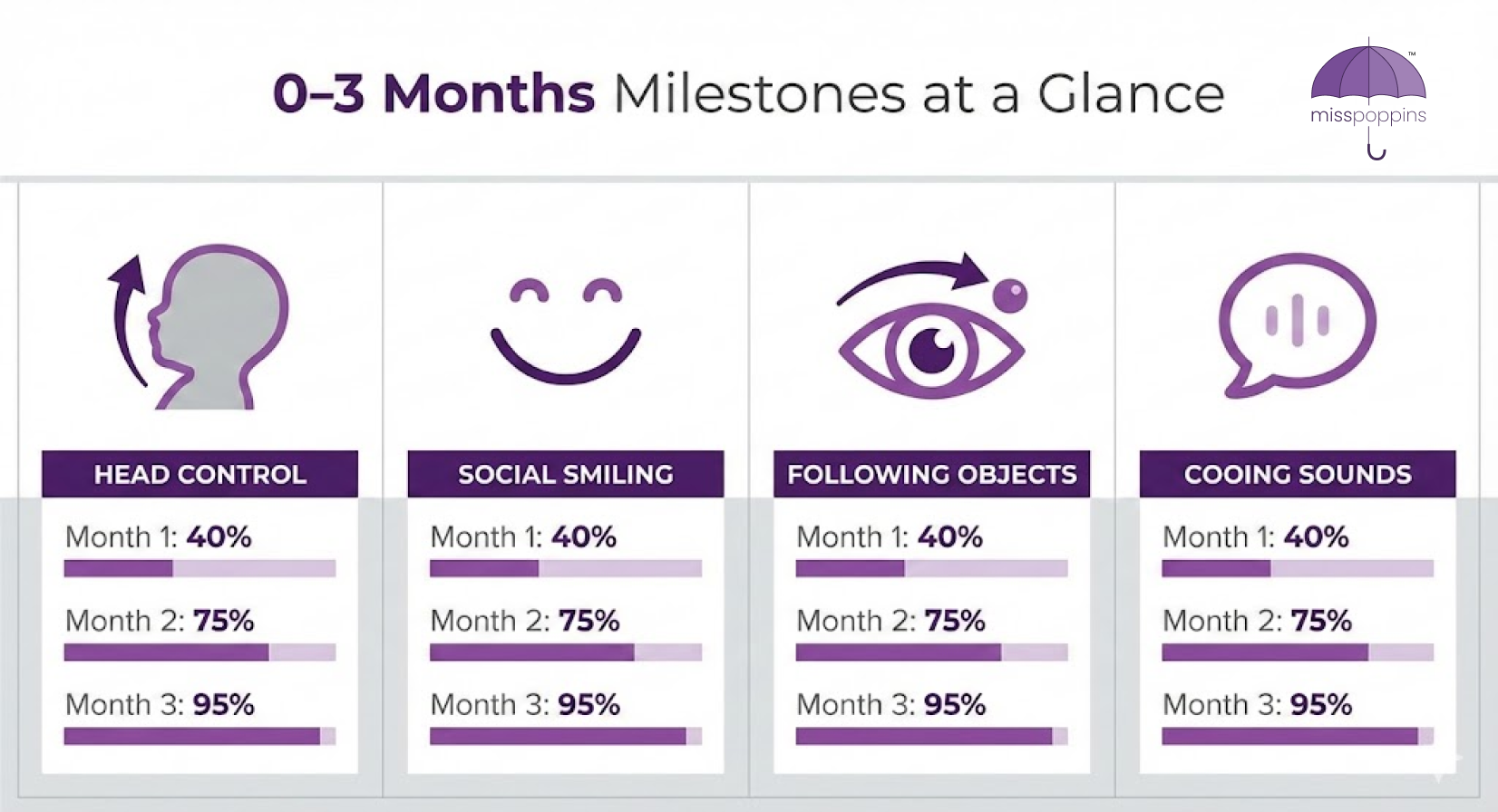
Watch for these exciting developments:
Month 1:
Lifts head briefly during tummy time
Focuses on faces 8-12 inches away
Responds to loud sounds
Makes jerky, uncontrolled movements
Month 2:
Begins to smile socially (not just gas!)
Follows moving objects with eyes
Holds head up for longer periods
Starts cooing and gurgling
Month 3:
Holds head steady when held upright
Brings hands to mouth
Swipes at dangling objects
Opens and closes hands
May roll from tummy to back
Remember, every baby develops at their own pace. These milestones are guidelines, not strict deadlines. If you have concerns about your baby's development, consult your pediatrician.
Growing Baby (4-6 Months): New Adventures Begin
Between four and six months, your baby becomes more interactive, social, and ready to explore the world—including new tastes!
Introduction to Solids
This is an exciting milestone for Indian parents, often celebrated with traditional first-feeding ceremonies like annaprashan.
Traditional Indian First Foods
Indian families have long relied on nutritious first foods that are easy to digest:
Rice cereal or rice porridge (chawal ka paani): Light, easily digestible, and rarely causes allergies. Cook rice well, mash or blend, and thin with breast milk or formula.
Moong dal water: Rich in protein, this thin dal soup is gentle on tiny tummies. Boil moong dal until very soft, strain, and offer the liquid.
Mashed banana: Sweet, soft, and nutrient-rich. Ensure bananas are very ripe for easier digestion.
Apple or pear puree: Steam and mash for a smooth consistency. Both fruits are gentle and naturally sweet.
Sweet potato or pumpkin: Rich in vitamins and naturally sweet. Steam and puree until smooth.
Ragi porridge: This finger millet is a powerhouse of calcium and iron, important for growing babies.
When to Start: Most babies are ready around 6 months when they can:
Sit with minimal support
Show interest in food
Lost the tongue-thrust reflex
Can bring objects to their mouth
How to Introduce:
Start with single-ingredient foods
Introduce one new food every 3-4 days to watch for allergies
Begin with 1-2 teaspoons and gradually increase
Offer foods when baby is happy and alert, not overtired
Allergy Awareness
Food allergies affect 6-8% of children. Common allergens include:
Dairy products
Eggs
Peanuts and tree nuts
Fish and shellfish
Wheat and soy
Current guidelines recommend introducing allergenic foods early (after 4-6 months) rather than delaying, as this may reduce allergy risk. However, introduce them one at a time and watch for reactions like rashes, vomiting, diarrhea, or breathing difficulties.
In Indian cooking, be mindful of:
Khichdi containing dal (legume allergen)
Ghee (dairy allergen)
Suji (wheat allergen)
Always introduce these ingredients separately before combining them in mixed dishes.
Playtime and Stimulation
Play is your baby's work—it's how they learn about the world.
Developmentally Appropriate Activities:
Tummy time: Now longer and more enjoyable, aim for several sessions totaling 40-60 minutes daily
Rattles and soft toys: Choose toys that make sounds and have different textures
Mirror play: Babies love looking at faces, including their own
Reading books: Simple board books with high-contrast images capture attention
Singing and rhymes: Traditional lullabies and nursery rhymes in your regional language support language development
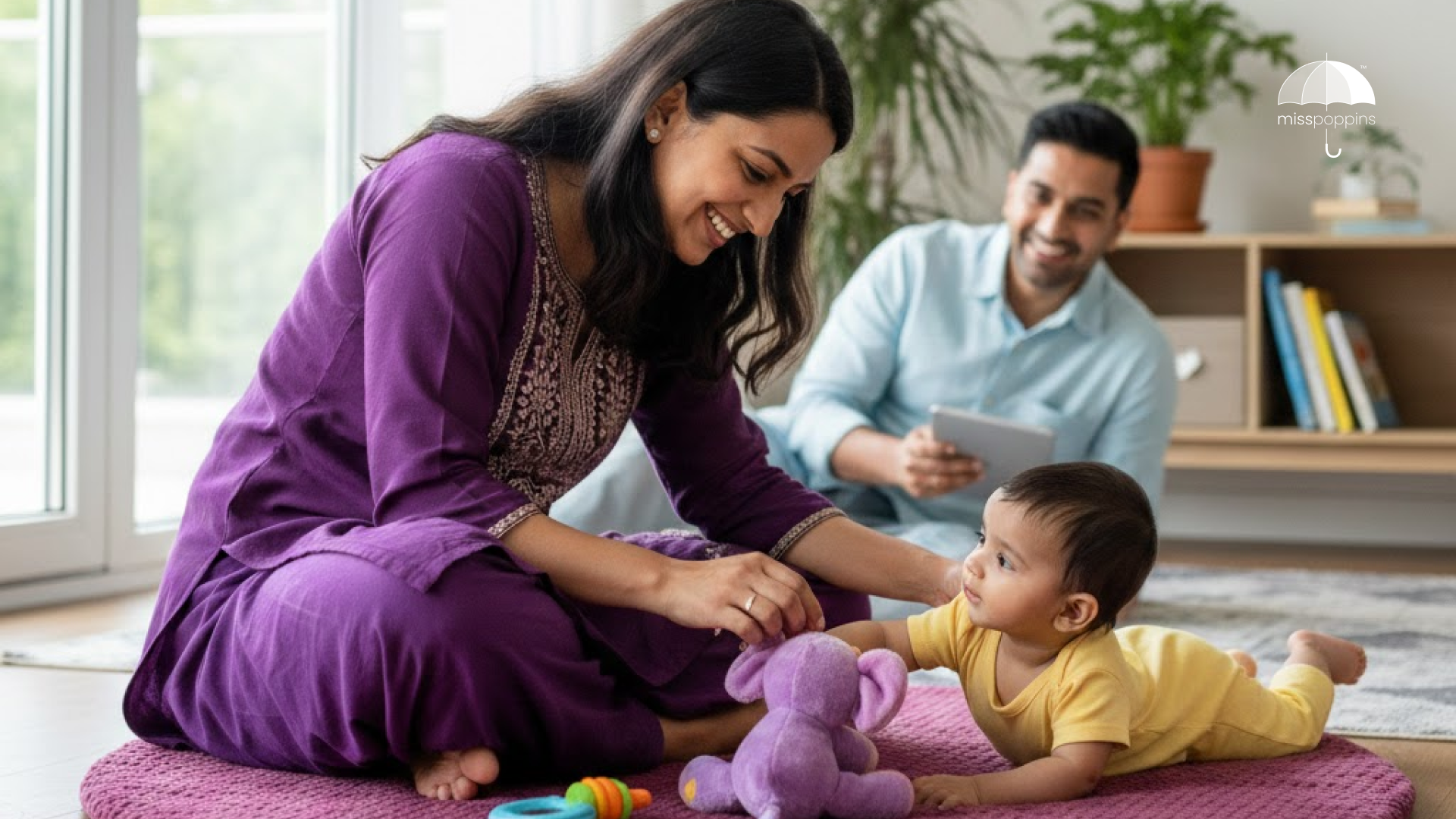
Rotate toys to maintain interest, and remember that everyday objects (wooden spoons, plastic containers, textured fabrics) can be just as fascinating as store-bought toys.
Teething Management
Most babies begin teething between 4-7 months, though timing varies widely.
Signs of Teething:
Increased drooling
Chewing on objects
Irritability or fussiness
Mild temperature (not high fever)
Changes in eating or sleeping patterns
Swollen, tender gums
Soothing Strategies:
Cold washcloth: Wet a clean cloth, refrigerate, and let baby chew on it
Teething toys: Refrigerate (not freeze) rubber teething rings
Gentle gum massage: Use a clean finger to rub baby's gums
Cold foods: If eating solids, offer chilled purees or yogurt
Traditional remedies: While some families use jaiphal (nutmeg) or honey, consult your pediatrician first. Never give honey to babies under 12 months due to botulism risk
Avoid teething necklaces (choking and strangulation hazards) and over-the-counter teething gels containing benzocaine.
Mobile Explorer (7-12 Months): On the Move!
The second half of your baby's first year is marked by increasing mobility, independence, and personality. This is when life gets really exciting—and busy!
Babyproofing Indian Homes
Indian homes present unique babyproofing challenges, especially in joint family settings with multiple floors, open courtyards, and varied living spaces.
Essential Babyproofing Steps:
Electrical safety:
Cover all electrical outlets with safety plugs
Secure loose wires and cables
Keep electrical appliances unplugged when not in use
Furniture anchoring:
Secure heavy furniture to walls (bookshelves, dressers, TV stands)
Use corner guards on sharp edges of tables and counters
Remove tablecloths that babies can pull
Kitchen safety:
Install stove guards or keep baby away during cooking
Store cleaning supplies, detergents, and chemicals in locked cabinets
Keep hot vessels and sharp objects out of reach
Lock lower cabinets with child-safety latches
Staircase protection:
Install sturdy safety gates at top and bottom of stairs
Ensure vertical railings are no more than 4 inches apart
Bathroom safety:
Never leave baby unattended near water (buckets, bathtubs, washing machines)
Keep toilet lids closed or use safety locks
Store medicines and cosmetics in locked cabinets
Windows and balconies:
Install window guards or stops that prevent windows from opening more than 4 inches
Never place furniture near windows
Ensure balcony railings are secure and gaps are narrow
Traditional elements:
Secure deity statues and oil lamps (diyas)
Keep prayer incense and camphor out of reach
Remove or secure floor-level electrical appliances like room heaters
Joint family considerations:
Communicate safety rules to all family members
Designate safe play areas
Be extra vigilant in shared spaces with elderly relatives who may not notice small objects or hazards
Encouraging Crawling and Walking
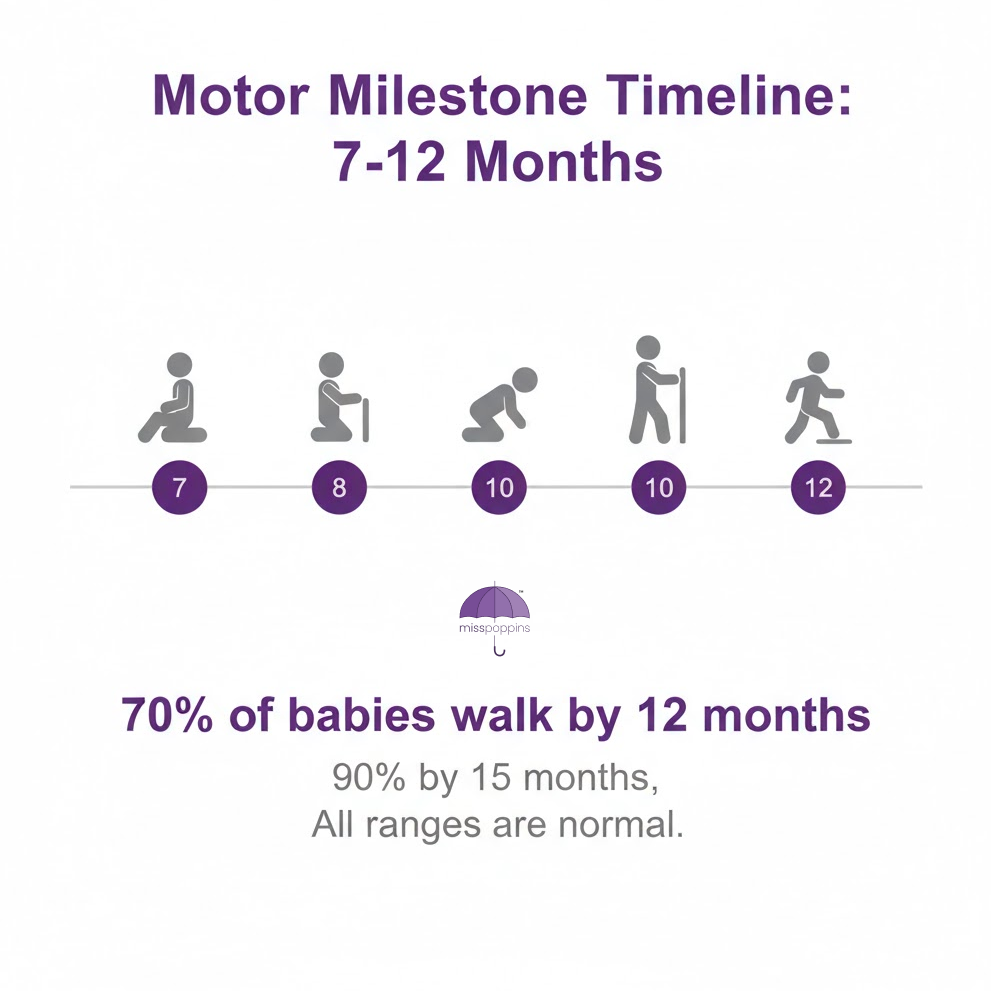
Mobility milestones vary greatly, but you can support your baby's development.
Crawling (typically 7-10 months):
Provide plenty of supervised floor time
Place toys just out of reach to motivate movement
Crawl alongside your baby to demonstrate
Some babies skip crawling entirely and move straight to walking—this is normal!
Pulling to stand (typically 8-10 months):
Provide sturdy, low furniture for support
Ensure the furniture is anchored and won't tip
Celebrate attempts, even unsuccessful ones
Cruising (typically 9-12 months):
Arrange furniture to create safe "cruising" paths
Hold baby's hands and practice walking together
Keep floors clear of slippery rugs or obstacles
First steps (typically 9-15 months):
Let baby practice barefoot for better grip and balance
Avoid walkers (linked to developmental delays and injuries)
Be patient—every baby walks when they're ready
Language Development
The first year is crucial for language development, and Indian babies often grow up in wonderfully rich multilingual environments.
Bilingual/Multilingual Environment:
Research shows that babies can learn multiple languages simultaneously without confusion. In fact, bilingualism offers cognitive benefits like enhanced executive function and mental flexibility.
Tips for multilingual development:
One parent, one language (OPOL): Each parent consistently speaks their native language
Time and place: Speak different languages at different times or in different settings
Quality over quantity: Regular exposure matters more than total hours
Don't mix mid-sentence: While code-switching is natural for adults, try to complete thoughts in one language when speaking to baby
Age-appropriate language milestones:
7-9 months:
Understands "no"
Responds to own name
Babbles strings of consonants ("bababa," "dadada")
Uses gestures like waving
10-12 months:
Says first words (may be in any language baby hears regularly)
Understands simple commands ("come here," "give me")
Imitates sounds and words
Points to desired objects
Supporting language development:
Talk constantly to your baby—narrate your activities
Read books daily in all languages baby is learning
Sing songs and recite rhymes in your regional language
Respond to baby's vocalizations to encourage communication
Limit screen time (babies learn best from human interaction)
Don't worry if your bilingual baby speaks slightly later than monolingual peers. They're processing more linguistic information, and any "delay" typically resolves by age three.
Health and Vaccination Schedule
India follows the Universal Immunization Programme (UIP), with some variations for private pediatric practices.
Key Vaccinations in the First Year:
At Birth:
BCG (tuberculosis protection)
Hepatitis B (1st dose)
OPV (oral polio vaccine, zero dose)
6 Weeks:
DTaP/DTwP (diphtheria, tetanus, pertussis)
IPV (inactivated polio vaccine)
Hepatitis B (2nd dose)
Hib (Haemophilus influenzae type b)
Rotavirus (1st dose)
PCV (pneumococcal conjugate vaccine, 1st dose)
10 Weeks:
DTaP/DTwP (2nd dose)
IPV (2nd dose)
Hib (2nd dose)
Rotavirus (2nd dose)
PCV (2nd dose)
14 Weeks:
DTaP/DTwP (3rd dose)
IPV (3rd dose)
Hib (3rd dose)
Rotavirus (3rd dose)
PCV (3rd dose)
6 Months:
Hepatitis B (3rd dose)
Influenza (1st dose, then annually)
9 Months:
Measles, Mumps, Rubella (MMR, 1st dose)
Meningococcal vaccine (if recommended)
12 Months:
Hepatitis A (1st dose)
Typhoid conjugate vaccine
PCV booster
Important Notes:
Keep vaccination records updated in your baby's health booklet
Some vaccines may cause mild fever or irritability—this is normal
Serious reactions are rare but seek immediate medical attention for high fever (>101°F), difficulty breathing, or severe allergic reactions
Vaccination schedules may vary; follow your pediatrician's recommendations
Government facilities provide free vaccinations; private clinics may offer additional vaccines
Data Insight: According to the National Family Health Survey-5 (2019-21), only 76.4% of children in India are fully immunized by age 12-23 months. Ensuring your baby receives all recommended vaccines protects them from serious, preventable diseases.
When to Consult a Paediatrician
While most developmental variations are normal, certain signs warrant immediate medical attention.
Seek immediate care if:
High fever (>100.4°F rectally in babies under 3 months; >104°F in older babies)
Difficulty breathing or rapid breathing
Signs of dehydration (no wet diapers for 8+ hours, sunken fontanelle, no tears when crying)
Persistent vomiting or diarrhea
Unusual lethargy or difficulty waking
Blue or purple coloring around lips or nails
Seizures or uncontrolled shaking
Any injury involving significant bleeding or potential head trauma
Schedule an appointment if:
Baby isn't meeting major developmental milestones
Weight loss or poor weight gain
Persistent rash or skin changes
Consistent feeding difficulties
Unusual crying patterns or inconsolability
Concerns about hearing or vision
Questions about development, behavior, or care
Well-baby visits: Even when baby seems perfectly healthy, regular check-ups are crucial. These visits typically occur at 1 month, 2 months, 4 months, 6 months, 9 months, and 12 months. During these appointments, your pediatrician:
Monitors growth and development
Administers vaccinations
Addresses your questions and concerns
Provides anticipatory guidance for the next stage
Finding the right pediatrician:
Seek recommendations from family and friends
Look for Indian Academy of Pediatrics (IAP) membership
Consider location and availability for emergencies
Ensure good communication and respect for your parenting choices
Check if they're comfortable with your feeding choices and family structure
Trust your instincts—you know your baby best. If something feels wrong, it's always better to check with your doctor.
Conclusion: Celebrating the First Year
Your baby's first year is a whirlwind of growth, learning, and love. From those first precious snuggles to the triumphant first steps, each milestone represents not just your baby's development but your growth as a parent too.
Remember that parenting in India comes with its own beautiful complexities—balancing traditional wisdom with modern practices, navigating joint family dynamics, raising children in multilingual environments, and adapting global advice to local realities. You're not just raising a baby; you're nurturing the next generation while honoring your cultural heritage.
There will be challenging days when nothing seems to work, and magical days when your baby's smile makes everything worthwhile. There will be moments of doubt and moments of pure confidence. All of these experiences are normal, valid, and part of the incredible journey of parenthood.
As you close this first year and look ahead to toddlerhood, take time to celebrate how far you've come. Look through photos, reread journal entries, and marvel at how much your tiny newborn has grown. Trust yourself, trust your baby, and know that you're doing an amazing job.
The first year is just the beginning of a lifetime of love, learning, and adventure together.
Download Our Resources
📱 Download the MissPoppins App
Get personalized parenting tips, milestone trackers, vaccination reminders, and connect with a community of Indian parents. Available on iOS and Android.
📘 Free Ebook: "The Complete Indian Baby Care Guide"
Download our comprehensive 50-page ebook featuring:
Detailed month-by-month development charts
Traditional Indian baby care practices
100+ healthy baby food recipes
Sleep training guides tailored for Indian families
Emergency response protocols
And much more!